In mobile networks, most attacks do not look like traditional IT intrusions. They do not rely on malware execution or endpoint compromise. Instead, they exploit the protocols that keep the network running.
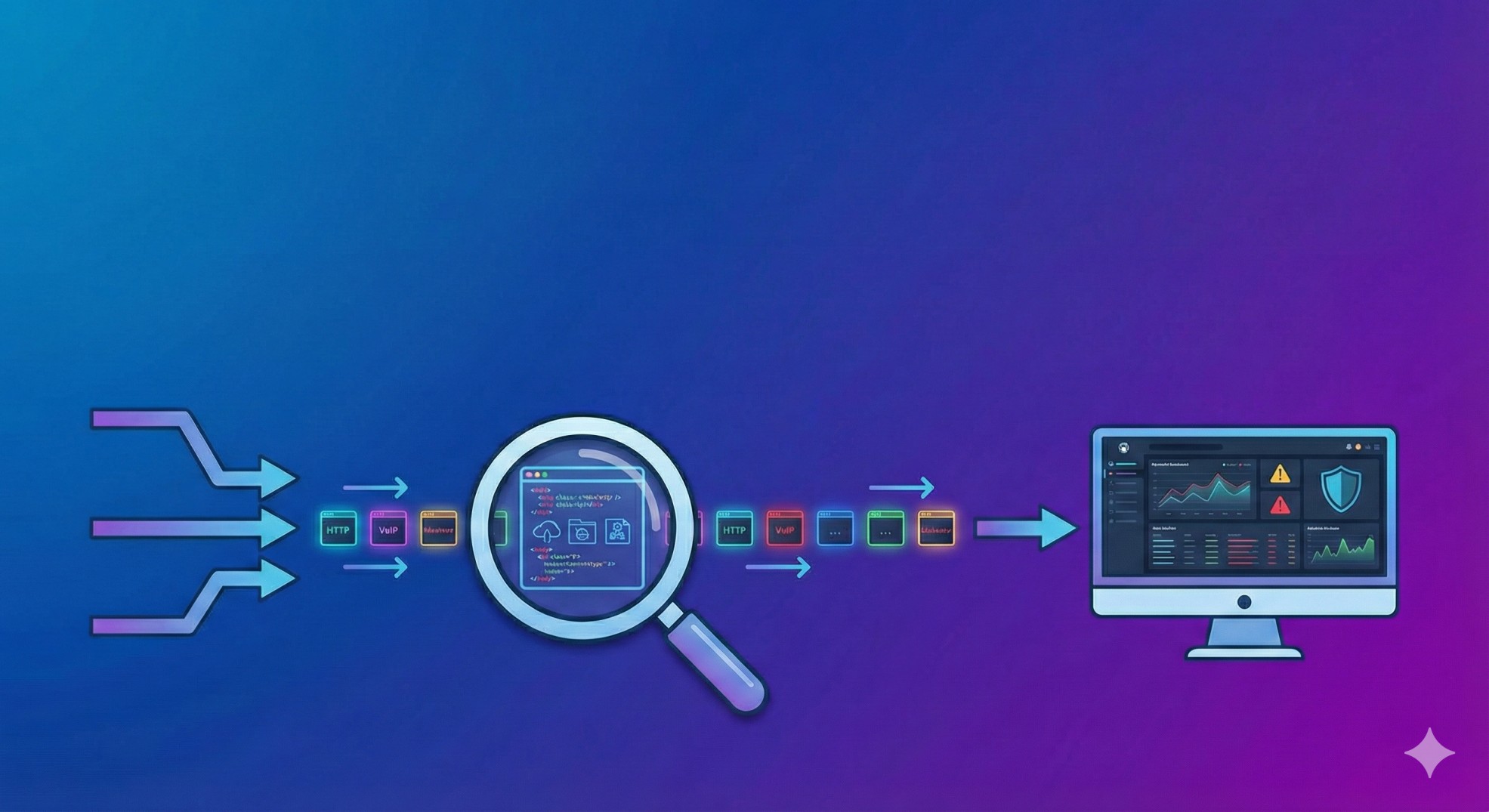
This is where Deep Packet Inspection, commonly referred to as DPI, becomes essential. DPI monitoring allows operators to inspect, understand, and correlate telecom protocol traffic at a level where real attacks become visible.
Despite the rise of encryption, cloud native architectures, and AI driven analytics, DPI remains one of the most effective foundations for mobile network security monitoring.
What DPI Monitoring Means in Telecom Context
DPI in telecom is fundamentally different from DPI in enterprise IT networks. It is not limited to application identification or traffic shaping. It is about protocol awareness.
Telecom DPI understands signaling protocols, session control flows, mobility procedures, and roaming interactions. It parses messages, parameters, state machines, and behavioral sequences across interfaces.
This capability is critical because telecom attacks rarely violate protocol syntax. They abuse legitimate features, trust assumptions, and edge cases defined by the standards themselves.
Why Traditional Monitoring Fails in Mobile Networks
Classic security monitoring approaches rely heavily on IP addresses, ports, and volume based anomalies. In mobile networks, these signals are often meaningless.
Signaling traffic is low bandwidth but high impact. A single malicious SS7 or Diameter message can trigger location tracking, call interception, or service disruption without generating noticeable traffic spikes.
Without DPI, these messages are indistinguishable from normal network operations. Logs alone are insufficient, and perimeter firewalls lack protocol context.
DPI Across Core Telecom Protocols
DPI monitoring is effective because it operates directly at the protocol layer.
In SS7 environments, DPI detects mapping attempts, unauthorized location requests, and fraudulent SMS routing by analyzing message types and call flows.
In Diameter networks, DPI identifies roaming abuse, policy manipulation, and subscriber data exposure by correlating command codes, session states, and peer behavior.
In GTP, DPI enables detection of tunnel abuse, unauthorized session creation, and user plane manipulation that can lead to data exfiltration or billing fraud.
In IMS and SIP, DPI allows operators to detect call hijacking, fraud, and denial of service attacks that directly impact voice services and emergency availability.
In 5G service based architectures, DPI extends to HTTP based APIs, service discovery flows, and inter service communication, where abuse often appears valid at first glance.
DPI as the Foundation for Detection and Correlation
DPI on its own provides visibility. Its real value emerges when combined with correlation and context.
By observing sequences of messages rather than individual packets, DPI enables behavioral detection. This includes identifying abnormal call flows, repeated probing patterns, or deviations from normal roaming behavior.
Correlation across protocols is especially important. Many real world attacks span multiple interfaces, such as SS7 triggering downstream GTP or IMS impact. DPI provides the raw telemetry needed to connect these dots.
DPI in Encrypted and Cloud Native Networks
Encryption does not eliminate the need for DPI. In telecom environments, many critical control plane interfaces remain inspectable by design, even when transport security is enabled.
For encrypted protocols, DPI often focuses on metadata, message structure, timing, and behavior rather than payload content. In cloud native 5G environments, DPI is increasingly deployed as a virtualized or containerized function integrated into the monitoring stack.
This allows operators to maintain protocol visibility while aligning with modern network architectures.
Operational Benefits Beyond Security
While security is the primary driver, DPI monitoring also supports operational resilience.
It helps detect misconfigurations, interoperability issues, and abnormal signaling behavior caused by vendor bugs or integration errors. Many incidents initially classified as outages are later found to be security related and vice versa.
DPI provides a shared source of truth between security and network engineering teams, reducing investigation time and finger pointing during incidents.
Limitations and Misconceptions
DPI is not a silver bullet. It requires protocol expertise, continuous tuning, and accurate baselining. Poorly implemented DPI can generate noise or miss subtle attack patterns.
Another misconception is that DPI replaces threat intelligence or active testing. In reality, DPI complements these approaches. It validates whether known threats are actually occurring in the live network.
Effective telecom security relies on combining DPI monitoring with threat modeling, hunting, and periodic offensive testing.
Conclusion
Deep Packet Inspection remains one of the most critical defensive capabilities in mobile network security. As protocols evolve and networks become more complex, the need for protocol aware visibility only increases.
DPI enables operators to move from reactive incident handling to proactive detection and informed risk management. Without it, many of the most damaging telecom attacks remain invisible.
In modern mobile networks, DPI is not optional monitoring. It is the foundation of effective defensive engineering.